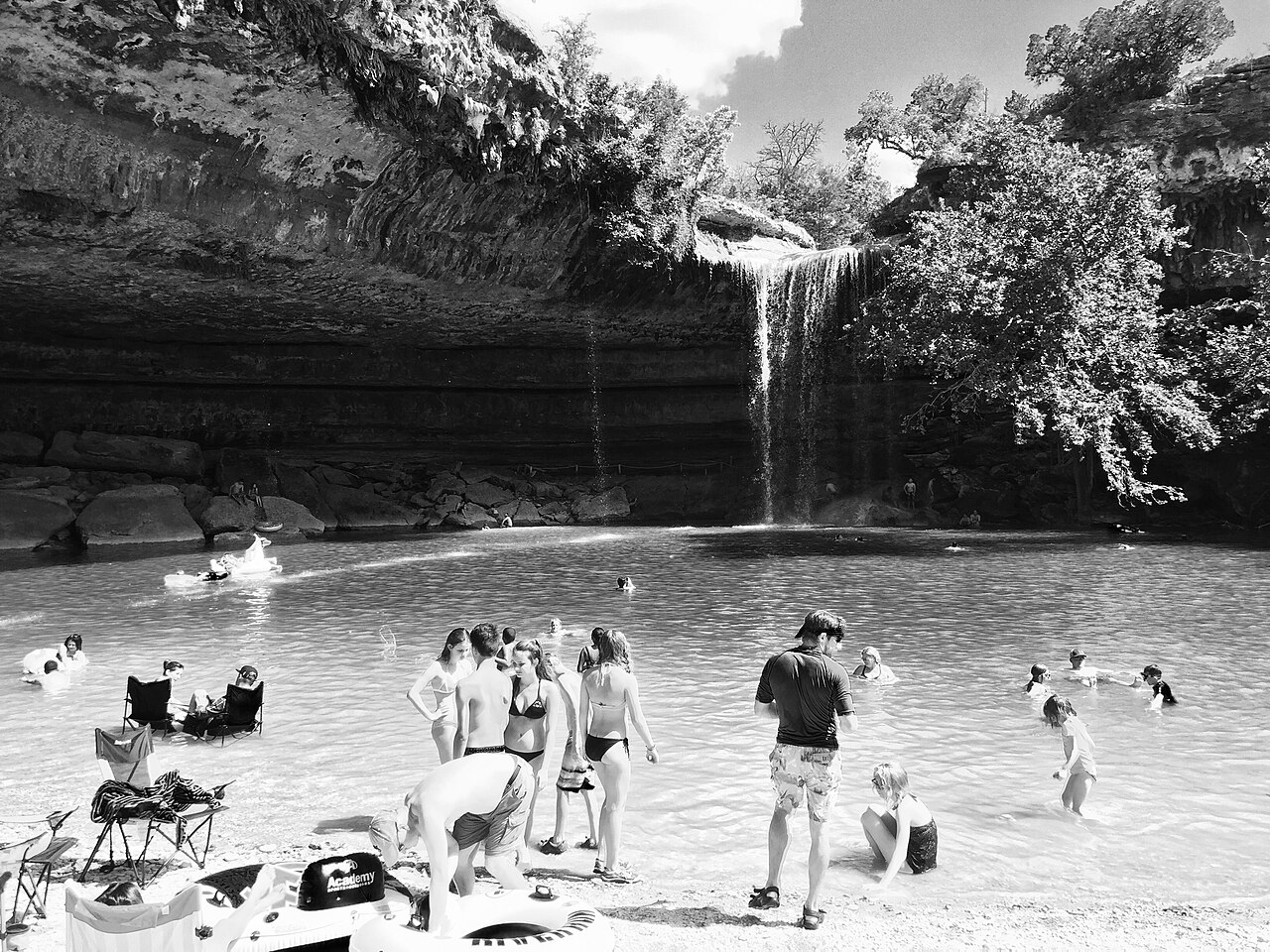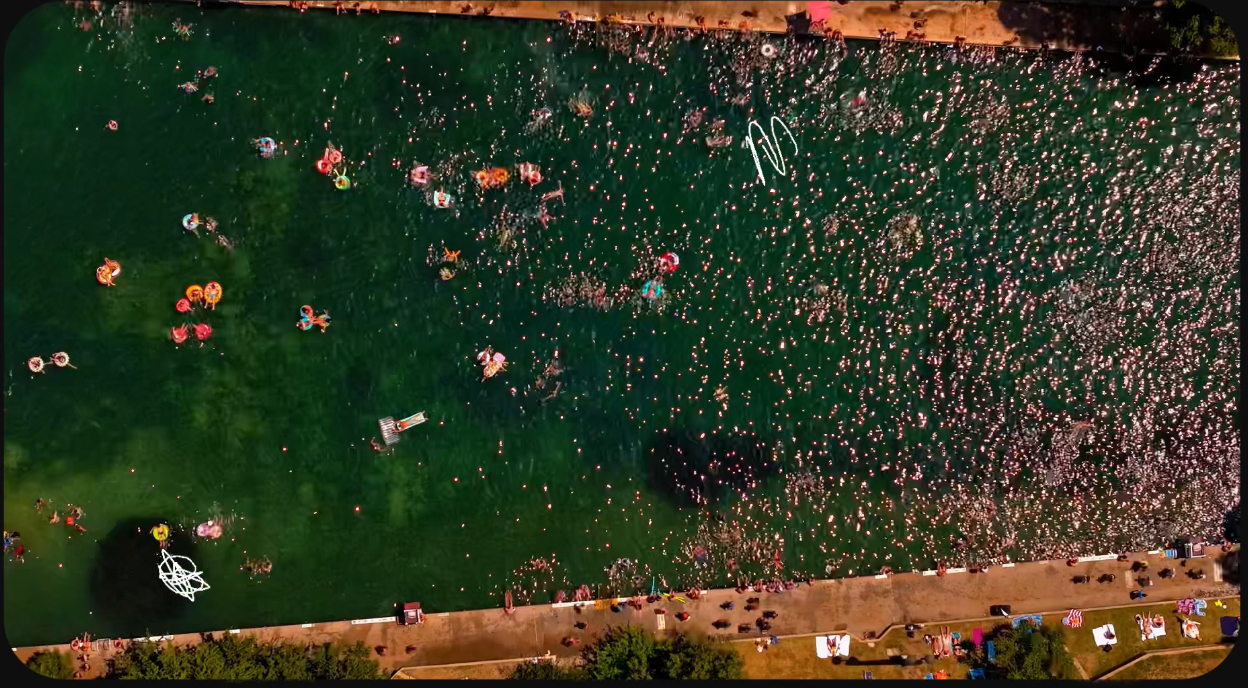
Barton Springs Pool is where Austin explains itself. A dammed stretch of Barton Creek inside Zilker Park, roughly three acres long, it is fed from below by the Edwards Aquifer through natural springs, which keep the water at a near-constant cool temperature (around the high sixties Fahrenheit) whatever the season — bracing in summer heat, oddly warm-feeling on a winter morning. The bottom is natural rock, algae and gravel at the shallow end, plunging to depths that invite proper dives under the diving board; the banks are grassy slopes shaded by pecans and live oaks where half the city seems to sunbathe on a July weekend. The pool is also a protected habitat: the endangered Barton Springs salamander lives only here and in nearby springs, which is why the city closes the pool periodically for cleaning and careful maintenance and why rules about glass, food and sunscreen etiquette are enforced. The people-watching is pure Austin — politicians and students, retirees doing their daily laps, families, tattooed regulars and visitors wading in with a gasp. Entry is a modest fee for non-residents and cheaper for locals, and the pool has long kept free swim hours at the edges of the day; check the city's schedule before you go, because hours shift with the season and weekly cleaning. The city also looks after the historic bathhouse, and restrooms and showers are reachable from the pool side; check the city's status page for any works.
The springs were sacred and practical long before the pool. Indigenous peoples camped by them for thousands of years, Spanish missionaries paused here, and nineteenth-century Austin used the creek for mills and picnics before the city bought the land and built the dams in the 1920s and 1930s, turning the springs into the swimming hole that anchors Zilker Park. The bathhouse came later; the Save Our Springs movement of the 1990s, which fought upstream development to protect water quality, made the pool a symbol of the city's environmental politics, and it remains politically sacred — debates about Austin's growth still get framed in terms of what they might do to Barton Springs.
Robert Redford learned to swim here as a child visiting relatives, a fact Austinites mention with satisfaction.
How to do it right
Go early. Morning laps on a summer weekday are serene, the water is at its clearest and the lawn is empty; by early afternoon on a hot weekend the entrance can queue and the slopes fill shoulder to shoulder. Walk in at the shallow end if the cold scares you, or commit at the diving board and get the shock over in one go.
Bring a towel to lie on the grass, water shoes if your feet are tender on algae-slick rock, and cash or a card for entry. Lifeguards are on duty during operating hours. Parking along Barton Springs Road and in the Zilker lots is limited and paid on busy days — the bike share, a rideshare or the walk along the hike-and-bike trail from downtown is easier.
The pool sits inside Zilker Park, so build a day around it: the Zilker Botanical Garden is a short walk up the hill, the Zilker Playscape and the miniature train delight kids, canoe and paddleboard rentals launch on Barton Creek nearby, and the Barton Creek Greenbelt trailheads lead upstream to rocky swimming spots after good rains. In autumn, the Great Lawn hosts the Austin City Limits Music Festival and in December the Trail of Lights, both of which tighten access and parking. Year-round swimmers have a club and a ritual; visitors get a single perfect hour that makes the Texas heat suddenly irrelevant.
What to expect
The experience
A natural spring-fed pool with a rock bottom, a diving board, lifeguards and grassy slopes for sunbathing — modest entry fee, cheaper for residents, with long-standing free swim hours at the edges of the day.
Best time
Weekday mornings for clear water and empty lawns; summer weekends after noon are crowded. Winter swims are a local badge of honor.
How long
Two to three hours with lawn time; a quick dip takes thirty minutes.
Tips
Check the city status page for cleaning closures and hours. Bring water shoes for slick rock and a towel for the grass. Bike, walk or rideshare — parking is tight. No glass.
Quick picks
- Best for
- Anyone who wants to feel what Austin is actually about — cold water, warm grass, every kind of local.
- Families
- Great for confident swimmers and lawn picnics; the shallow end is gentle and the Zilker Playscape is close.
- Couples
- An early swim then breakfast tacos is the classic Austin morning date.
- Pair with
- Zilker Botanical Garden up the hill, then the bats at sunset.
- Time needed
- A morning or an afternoon.
Good questions
How cold is the water?+
Around the high sixties Fahrenheit year-round, because it comes straight from the aquifer. It feels shocking for a minute in July and surprisingly mild on a winter morning.
Is it open now?+
Yes, the pool is normally open. It closes for weekly cleaning and after floods, so check the city status page on the day.
Is there a free time to swim?+
The pool has long offered free swimming at the edges of the day outside lifeguard hours. Times change by season, so confirm with the city before planning around it.
Is it safe for kids?+
Lifeguards are on duty in operating hours and the shallow end is gentle, but the deep end drops off quickly and the rock is slippery. Keep young or weak swimmers close.
Why does it close so often?+
The pool is home to the endangered Barton Springs salamander and floods carry debris in from the creek, so cleaning and maintenance are frequent and done carefully.