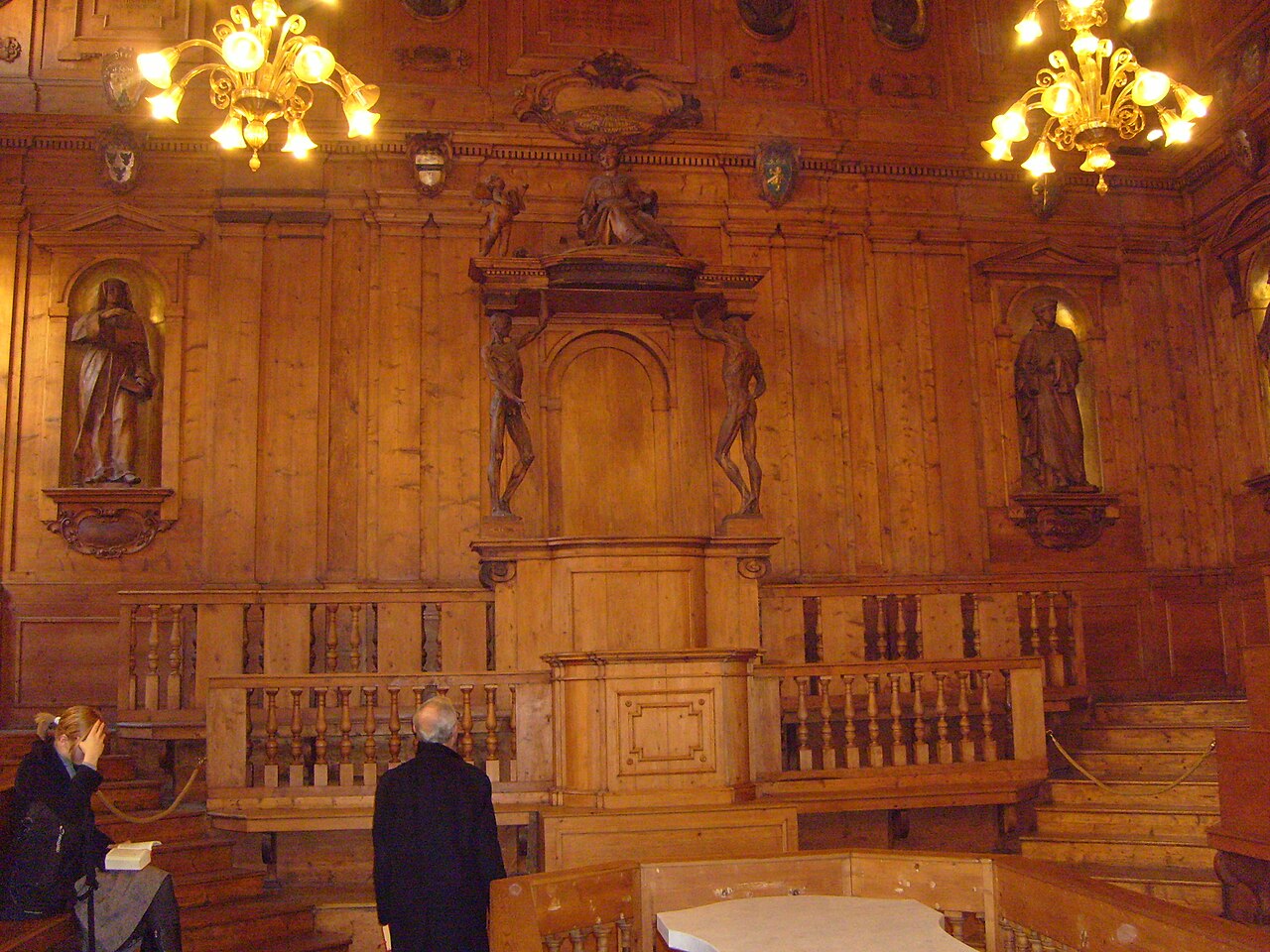
Archiginnasio and Anatomical Theatre
The sixteenth-century seat of the old University of Bologna, its walls covered in student coats of arms, with a carved wooden anatomy theatre where dissections were once taught.
Italy
Bologna is the city Italians call la dotta, la grassa e la rossa: the learned one, for the oldest university in the Western world; the fat one, for a kitchen that gave the world tortellini, tagliatelle al ragù and mortadella; and the red one, for its terracotta roofs and brick palaces.
It is also one of the easiest Italian cities to love on foot. Some forty kilometres of porticoes, now a UNESCO World Heritage Site, shelter its streets from sun and rain, leading from the vast Piazza Maggiore and the unfinished Basilica of San Petronio to the medieval market lanes of the Quadrilatero, the Seven Churches of Santo Stefano and the anatomy theatre of the old university. The longest portico of all climbs 666 arches to the hilltop Sanctuary of San Luca. Beyond the walls, Modena and Parma make easy day trips for balsamic vinegar and Parmigiano Reggiano. This guide covers what is open in November, what to book, where to eat your way through the city and where to stay, with honest notes on the leaning towers that are still closed for repairs.
Archiginnasio and Anatomical Theatre
The sixteenth-century seat of the old University of Bologna, its walls covered in student coats of arms, with a carved wooden anatomy theatre where dissections were once taught.
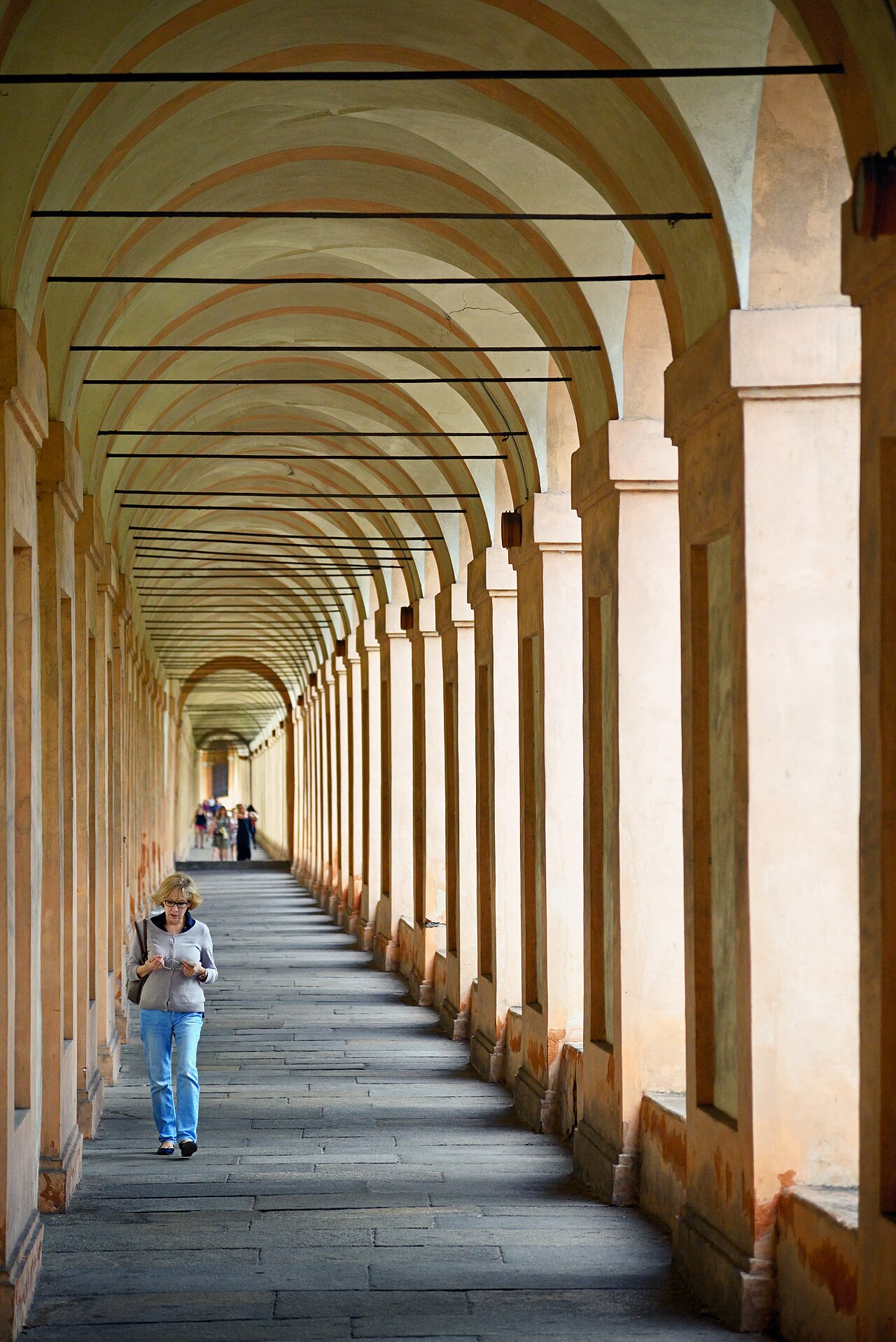
Sanctuary of San Luca and the Portico
The hilltop sanctuary that watches over Bologna, reached by the longest portico in the world, 666 arches climbing from the city gate, or by the little San Luca Express train.
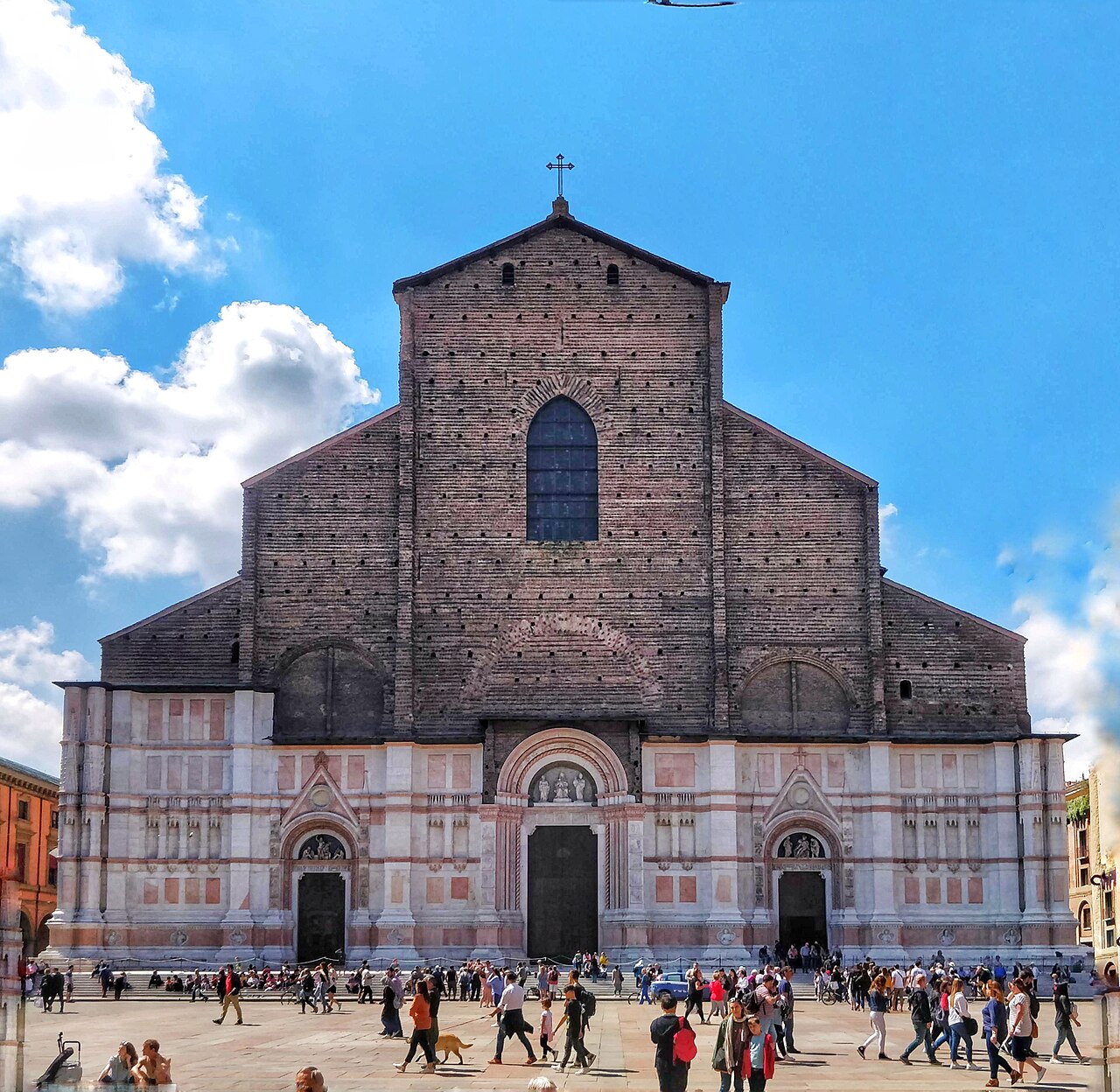
Basilica di San Petronio and Piazza Maggiore
The colossal Gothic basilica on Piazza Maggiore, with its famously unfinished facade, a giant meridian line on the floor and the Neptune Fountain on the square beside it.
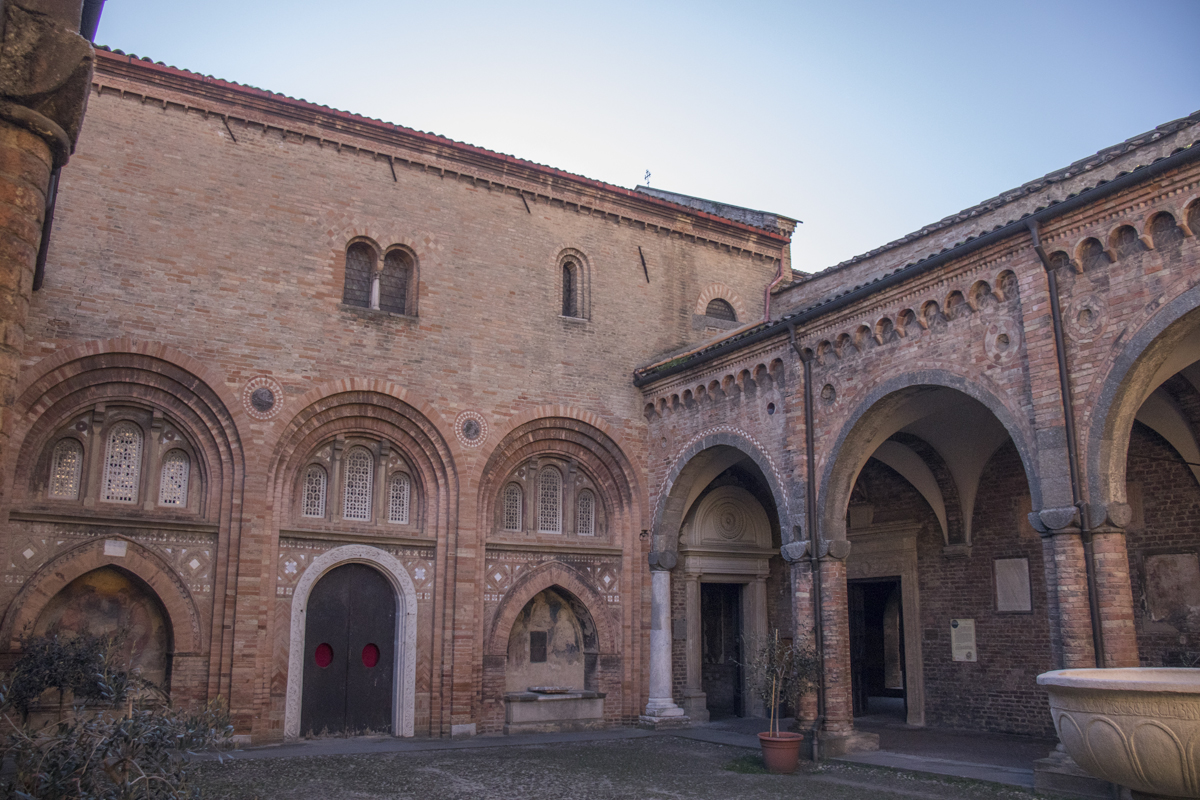
Santo Stefano (Seven Churches)
A cluster of interlocking churches, courtyards and a Romanesque cloister on a lovely sloping piazza, known to the Bolognese simply as the Seven Churches.
Hand-picked: every experience here has strong traveler reviews and a verified booking link.
The sixteenth-century seat of the old University of Bologna, its walls covered in student coats of arms, with a carved wooden anatomy theatre where dissections were once taught.
FreeThe colossal Gothic basilica on Piazza Maggiore, with its famously unfinished facade, a giant meridian line on the floor and the Neptune Fountain on the square beside it.
Climb the clock tower of Palazzo d’Accursio, the town hall on Piazza Maggiore, past the old clock mechanism to two terraces over the rooftops, then tour the city art collections.
FreeA cluster of interlocking churches, courtyards and a Romanesque cloister on a lovely sloping piazza, known to the Bolognese simply as the Seven Churches.
The hilltop sanctuary that watches over Bologna, reached by the longest portico in the world, 666 arches climbing from the city gate, or by the little San Luca Express train.
Graze your way through the medieval market lanes beside Piazza Maggiore with seven tasting vouchers, a map and a smartphone audio guide to the main sights.
A two-hour guided walk through the historic centre with a local guide, three classic Bolognese tastings and a sweet treat to finish, in a small group.
A guided visit to Acetaia Marchi, a family balsamic vinegar producer just outside Modena, with a tasting of aged balsamic, an easy half-day trip from Bologna.
A guided visit to a Parmigiano Reggiano cheese dairy in Noceto, in the countryside near Parma, to see how the king of cheeses is made and aged.
A small-group, hands-on class in Bolognese fresh pasta in the countryside at Castel San Pietro Terme, a short train ride from Bologna, with lunch or dinner and local wine.
The museum in the town where Ferrari road cars and Formula One cars are built, with championship-winning racers, limited-series supercars and the story of the marque from its first decades to the present.
A bright, sculptural pavilion beside the founder’s birthplace and his father’s workshop, with a panoramic film about Enzo Ferrari and cars from the first Ferrari to modern designs.
Hotels we would book ourselves, from splurges to good-value bases.
Via Indipendenza, Historic Centre
Bologna’s grand old five-star hotel, in an eighteenth-century palazzo on Via Indipendenza a few steps from Piazza Maggiore, with Carracci frescoes, a wellness area and the I Carracci restaurant.
Check rates →Piazza Maggiore
A characterful four-star hotel in a medieval building pressed against the side of San Petronio, with beamed ceilings, basilica views, free bikes and breakfast included.
Check rates →Ghetto and Via Oberdan
An elegant, quiet four-star hotel in a thirteenth-century palazzo between Piazza Maggiore and the Two Towers, with frescoed ceilings, soundproofed rooms and its own restaurant.
Check rates →Via Indipendenza, near the Station
A stylish four-star superior hotel in an Art Nouveau palazzo on Via Indipendenza, between the station and Piazza Maggiore, with a Michelin-starred restaurant and a rooftop lounge.
Check rates →Quadrilatero
A small, good-value three-star hotel on the upper floors of an old building in the Quadrilatero market lanes, two minutes from Piazza Maggiore and the Two Towers.
Check rates →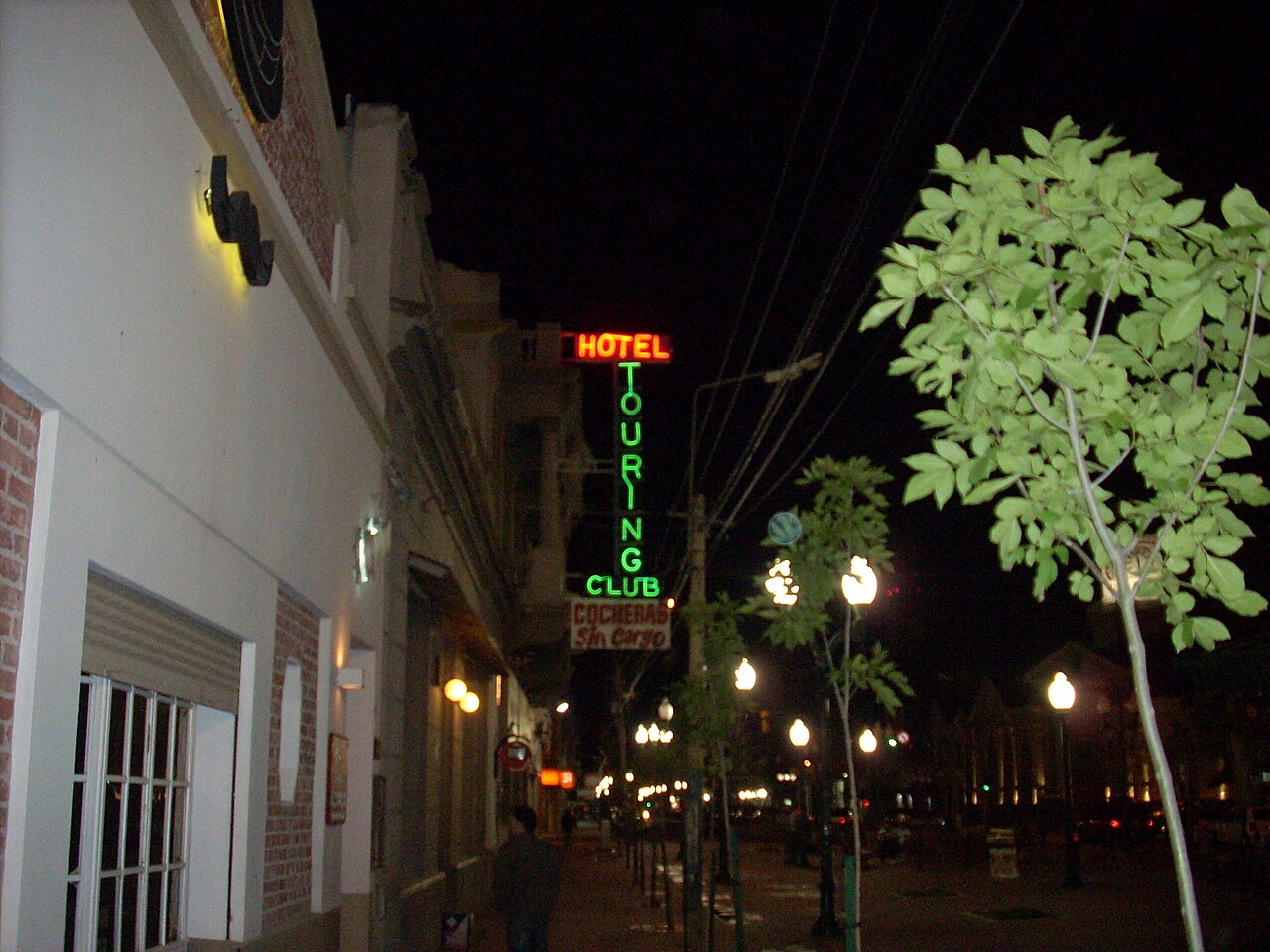 $$$
Via de Mattuiani, Historic Centre
A four-star hotel on Via de Mattuiani in the historic centre, a couple of minutes from the Basilica of San Domenico and six minutes on foot from Piazza Maggiore, with a rooftop terrace and a garden.
Check rates →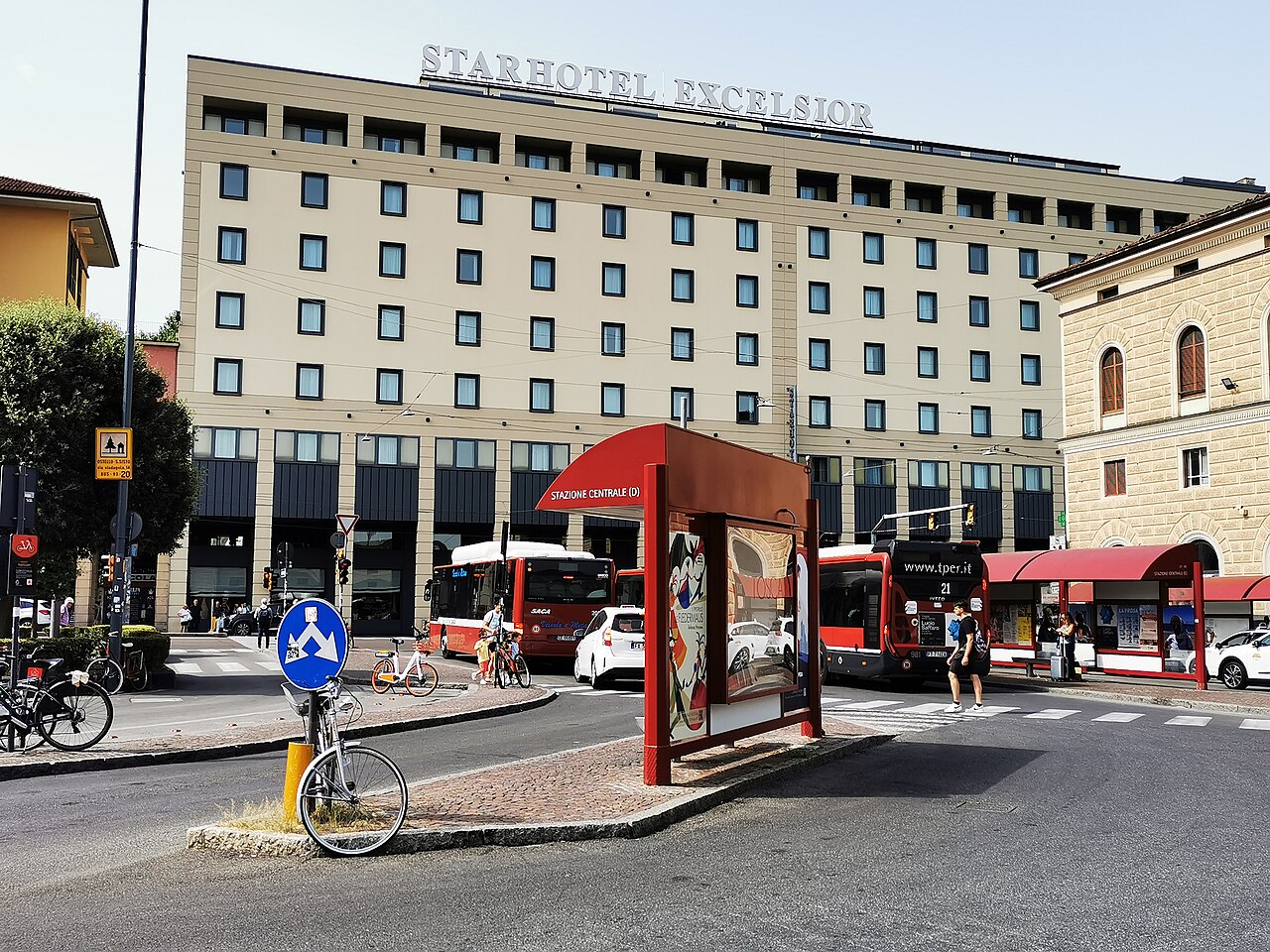 $$$
Viale Pietramellara, Station Area
A four-star hotel on Viale Pietramellara, about a minute on foot from Bologna Centrale station, with family rooms, a gym and the Avorio restaurant.
Check rates →Via del Pilastro, BolognaFiere District
A four-and-a-half-star hotel in the BolognaFiere district with a seasonal outdoor pool, a garden, free parking and a restaurant called Garganelli, a short drive from the centre.
Check rates →Via dell Orso, Historic Centre
A four-star hotel on Via dell Orso, a minute from Via Indipendenza and six minutes on foot from Piazza Maggiore, with a rooftop terrace, a bar and lounge and room service.
Check rates →Via Indipendenza, Historic Centre
A four-star hotel on Via Indipendenza beside the pedestrian zone, ten minutes on foot from Piazza Maggiore and eight from the station, with a garden, a terrace and a covered garage.
Check rates →Via Goito, Historic Centre
A three-star hotel on Via Goito with breakfast buffet included, a terrace and a garden, five minutes on foot from Piazza Maggiore and a minute from Via Indipendenza.
Check rates →Piazza Galileo Galilei, Historic Centre
A four-star hotel on Piazza Galileo Galilei, three minutes on foot from Piazza Maggiore and San Petronio, with king rooms, attic suites and rooms for up to five guests.
Check rates →Ready-made pairings: a top sight and a hotel that suits it. Add both to your trip and book each when you are ready.
Do
Archiginnasio and Anatomical TheatreStay
Grand Hotel Majestic già BaglioniVia Indipendenza, Historic Centre
Do
Sanctuary of San Luca and the PorticoStay
Art Hotel CommerciantiPiazza Maggiore
Do
Basilica di San Petronio and Piazza MaggioreStay
Hotel Brun BolognaPiazza Galileo Galilei, Historic Centre
While you are there
Concerts, shows and games are on sale in the coming months, from stadium nights to small rooms. Our sister site Purveyor lists them with dates, venues and seats.
A practical primer for a first visit to Bologna: what to book ahead, getting in from the airport and around on foot, how many days you need, food experiences and day trips, and what is closed.
Where to stay in Bologna: the best neighbourhoods for a first visit, from Piazza Maggiore and the Quadrilatero to the Ghetto and Via Indipendenza, with a hotel for every budget.
A three-day Bologna itinerary: the squares, the university quarter, the market lanes and the climb to San Luca on days one and two, then a day out to Modena or Ravenna on day three.
A guide to eating in Bologna: tagliatelle al ragù, tortellini in brodo, mortadella and crescentine, how aperitivo works, how to read a menu and which food experiences are worth booking.
The best day trips from Bologna by train or tour: Modena for balsamic and Ferrari, Parma for ham and cheese, Ravenna for mosaics, and the factory museums of the Motor Valley.
When to visit Bologna: spring and autumn for walking, summer heat and August quiet, and foggy winter for tortellini, with what changes in each season and how to plan around it.