Tours is the lively city at the centre of the Loire châteaux, and its old town is the best part of it. The medieval quarter is centred on Place Plumereau, a small square lined with half-timbered houses whose upper floors lean out over café terraces. Around it, narrow lanes run between timber-framed buildings, courtyards and stone mansions, and a short walk takes you to the cathedral and the Saint-Martin quarter, where the saint's tomb was a pilgrimage destination for centuries. The square is busiest on summer evenings, when the terraces are packed, but even in low season it is a pleasant place for a coffee at midday or a glass of Vouvray in the early evening, with the lights coming on in the old houses. The old town is free to explore and small enough to walk in an hour or two. A private guided walk of the historic centre is a good way to learn who built what; use Get tickets to see the options.
Begin in Place Plumereau and look up. The timber frames, the carved corner posts and the slate roofs have been carefully restored and follow the medieval pattern, and the square has been a social centre since the fifteenth century. The lanes around it, rue du Grand Marché, rue Briçonnet and the surrounding streets, hold shops, bakeries and small restaurants, and in the evening they fill up with students and locals.
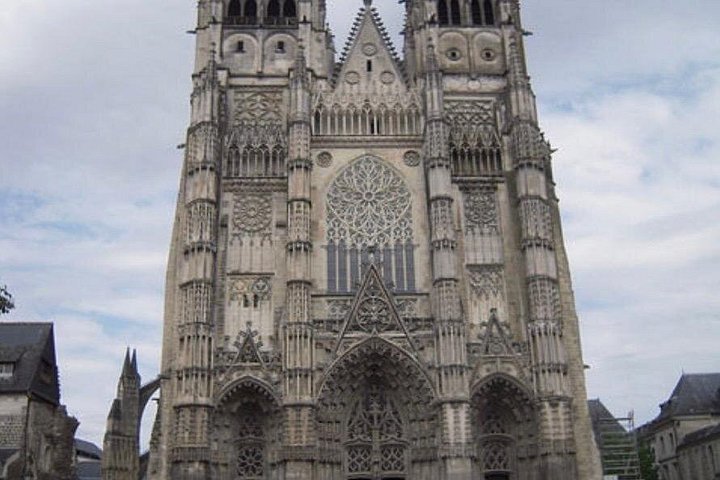
Walk on to the cathedral of Saint-Gatien, with its Gothic façade and stained glass, and to the Saint-Martin quarter, where the basilica and the old tower recall the saint who became the patron of France. The riverside is a pleasant stroll, with the Loire à Vélo route starting nearby, and the covered market, the Halles, is a good place for lunch. The city is flat and easy on foot, with a tram line that links the station to the old town.
Practical details
The old town is free and open all the time, with the best atmosphere from late morning into the evening. Restaurants on the square itself are lively but not always the best value, so walk a street or two for a quieter meal. A private guided walk of the historic centre is available if you want the stories behind the façades; use Get tickets to see the options and the languages offered.
Tours is also the best base for trains to the châteaux, and a night here before or after a day trip adds a good dinner to the itinerary.
What to expect
The experience
A self-guided walk through the medieval quarter around Place Plumereau, with cafés, timber-framed houses and a short walk to the cathedral.
Best time
Late afternoon into evening for the atmosphere and the lights on the old houses.
How long
One to two hours, longer if you stop for a meal.
Tips
Eat a street back from the square for better value. A private guided walk of the historic centre is available if you want the history; reserve it ahead.
Quick picks
- Best for
- Anyone using Tours as a base who wants an easy evening after a day of châteaux.
- Families
- Flat, free and full of cafés; children like the timber houses.
- Couples
- A glass of Vouvray on the square as the lights come on.
- Pair with
- A Vouvray tasting or a day trip to Chenonceau or Villandry.
- Time needed
- One to two hours.
Good questions
What is Place Plumereau?+
It is the central square of the medieval quarter of Tours, lined with half-timbered houses and café terraces. It is the city's main meeting place.
Is the old town free to visit?+
Yes, you can wander it at any time at no cost. Only the guided tours and museums have an admission fee.
Is there a guided walk?+
Yes, a private guided walk of the historic centre can be reserved ahead; use Get tickets to see the options.
Where should I eat?+
The square is fun for a drink, but a street or two away you will find better value restaurants. The covered market is good for lunch.
Is Tours a good base for the châteaux?+
Yes, it has the best train connections in the valley, with regional trains to Amboise, Chenonceaux, Azay-le-Rideau and Blois. It also has the widest choice of hotels and restaurants.