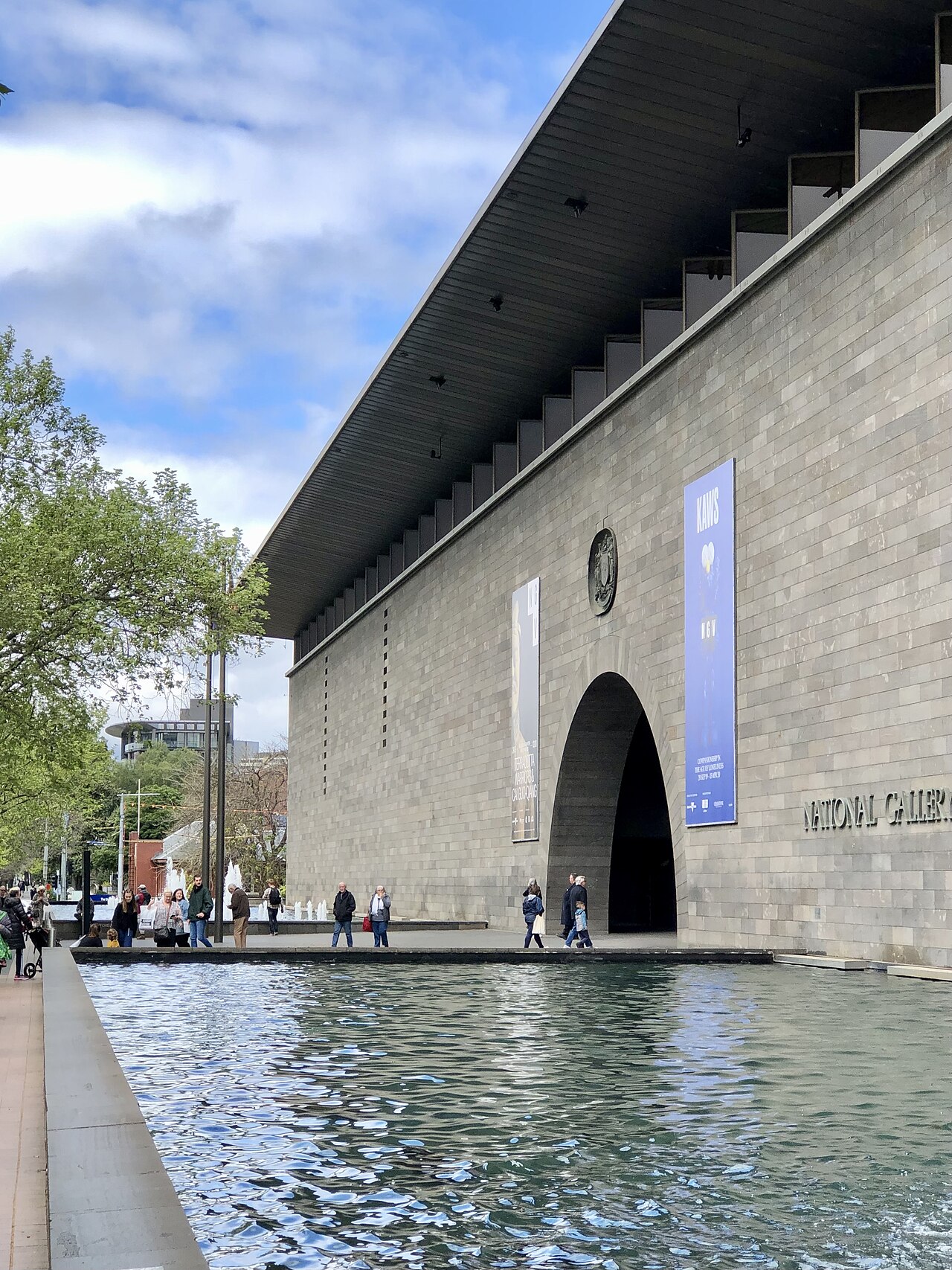
The National Gallery of Victoria is the cultural heavyweight of Melbourne and, for many visitors, the best free experience in the city. Founded in 1861, it is Australia's oldest public art museum, and its main building, NGV International on St Kilda Road, just south of the river, holds a collection that ranges across thousands of years and every continent: European painting from the old masters to the Impressionists, Asian ceramics and textiles, Pacific and African art, fashion and textiles, photography, decorative arts and a strong programme of contemporary design. The building itself is part of the visit. Designed by Roy Grounds and opened in 1968, it presents a severe bluestone face to the street, broken only by the entrance, where a sheet of water runs down a glass wall that every child in Melbourne has pressed their hands against. Inside, the Great Hall has a vast stained-glass ceiling by Leonard French; the custom is to lie on the carpet and look up at it. General admission to the collection is free and the gallery is open daily, so you can drop in for an hour or spend a day. Major exhibitions, usually including a big international show over the summer, carry a ticket. In Triennial years the headline summer event is the NGV Triennial, the gallery's free festival of contemporary art and design, which typically opens in December with dozens of projects by artists and designers from around the world, many of them new commissions. If you are in Melbourne between mid-December and the autumn in such a year, it is a reason to plan the trip around the gallery.
The NGV is really two galleries. NGV International on St Kilda Road holds the international collection, while the Ian Potter Centre at Federation Square, about ten minutes' walk away across Princes Bridge, is dedicated to Australian art. Both are free. If time is short, choose by interest: International for the global collection and the big shows, the Ian Potter Centre for Australian painting and First Nations art.
Ambitious visitors can do both in a day with lunch in between; the walk along St Kilda Road and over the river is pleasant in itself, and it passes the spire of Arts Centre Melbourne, the city's main performing arts venue.
The Triennial deserves a note of its own. Previous editions have drawn enormous crowds, turned the building into a playground of large-scale installations and made the gallery busy all summer. Recent editions have included a light work on the Waterwall that greets visitors on arrival, an oversized playable chess set, a 15-metre painting made over a year, a monumental sculpture installed in Federation Court and an exhibition designed for children.
Entry is free, but expect queues on weekends and in the school holidays; weekday mornings are the calmest. The gallery's restaurant, cafe and design shop are good, and there is a garden behind the building for a break.
How to plan your visit
General admission needs no ticket, but ticketed exhibitions sell timed entries, so book ahead online if a particular show is on your list. Check the venue's site for opening hours, since the gallery sometimes runs late openings and special evening programmes. Bags larger than a small daypack may need to be cloaked.
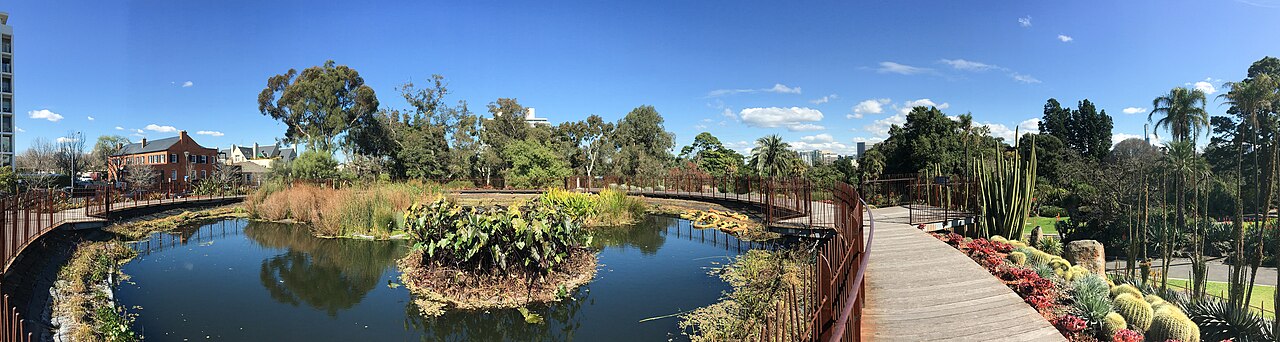
The gallery is a short tram ride or a ten-minute walk from Flinders Street Station along St Kilda Road; the Royal Botanic Gardens and the Shrine of Remembrance are a little further south, which makes the gallery the natural start of a day on the south side of the river.
Melbourne is also building a new contemporary gallery nearby as part of the arts precinct renewal, so expect some construction around the area for years to come.
What to expect
The experience
A large, free public art museum with permanent collections on several floors, ticketed major exhibitions and, in Triennial years, the free NGV Triennial across the building.
Best time
Weekday mornings. Summer weekends during the Triennial or a blockbuster show are very busy.
How long
Two hours for highlights; half a day for the collection plus a major exhibition.
Tips
Lie on the floor of the Great Hall to look up at the stained-glass ceiling. Book timed tickets for paid exhibitions in advance. Pair it with the Ian Potter Centre at Fed Square for Australian art.
Quick picks
- Best for
- Art lovers and anyone who wants a world-class museum for free.
- Families
- Very good: the Waterwall, the Great Hall ceiling and the children's gallery programmes work for kids, and the Triennial includes a show designed for them.
- Couples
- An unhurried afternoon in the galleries, then a walk to Southbank for a riverside drink.
- Pair with
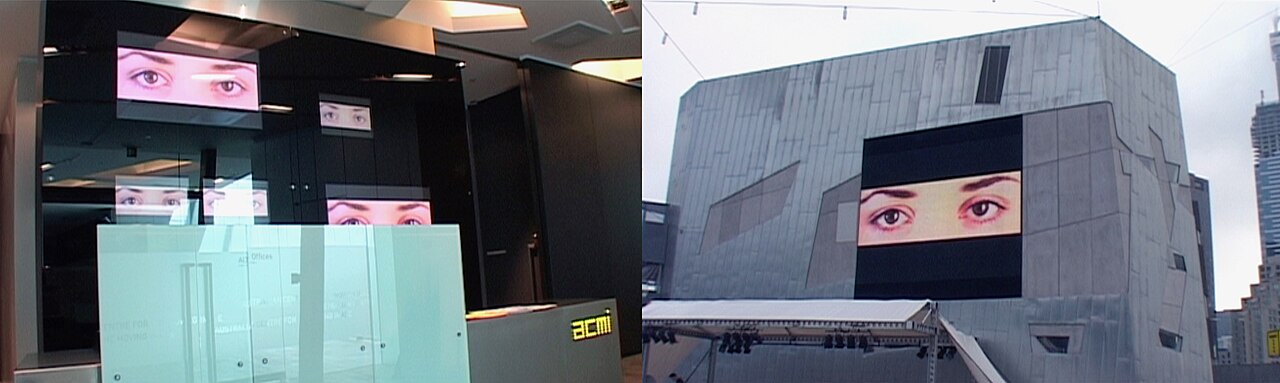
- The Royal Botanic Gardens to the south, Federation Square and ACMI across the river, or a show at Arts Centre Melbourne next door.
- Time needed
- Two to four hours.
Good questions
Is the NGV free?+
Yes. General admission to the collections at NGV International and the Ian Potter Centre at Federation Square is free. Some major exhibitions are ticketed.
When is the NGV Triennial?+
It is held every three years at NGV International and typically opens in December. Entry is free. Check the gallery's website for the opening and closing dates and any timed-entry arrangements.
What are the opening hours?+
NGV International is open daily, generally from 10am to 5pm. Hours can change for special events and late openings, so check the venue's site before you go.
What is the difference between NGV International and the Ian Potter Centre?+
NGV International on St Kilda Road shows international art and hosts major exhibitions; the Ian Potter Centre at Federation Square is devoted to Australian and First Nations art. Both are free and about ten minutes' walk apart.
How long should I spend at the NGV?+
Two hours covers the highlights. Allow half a day if you want to see a ticketed exhibition or the Triennial as well as the permanent collection.