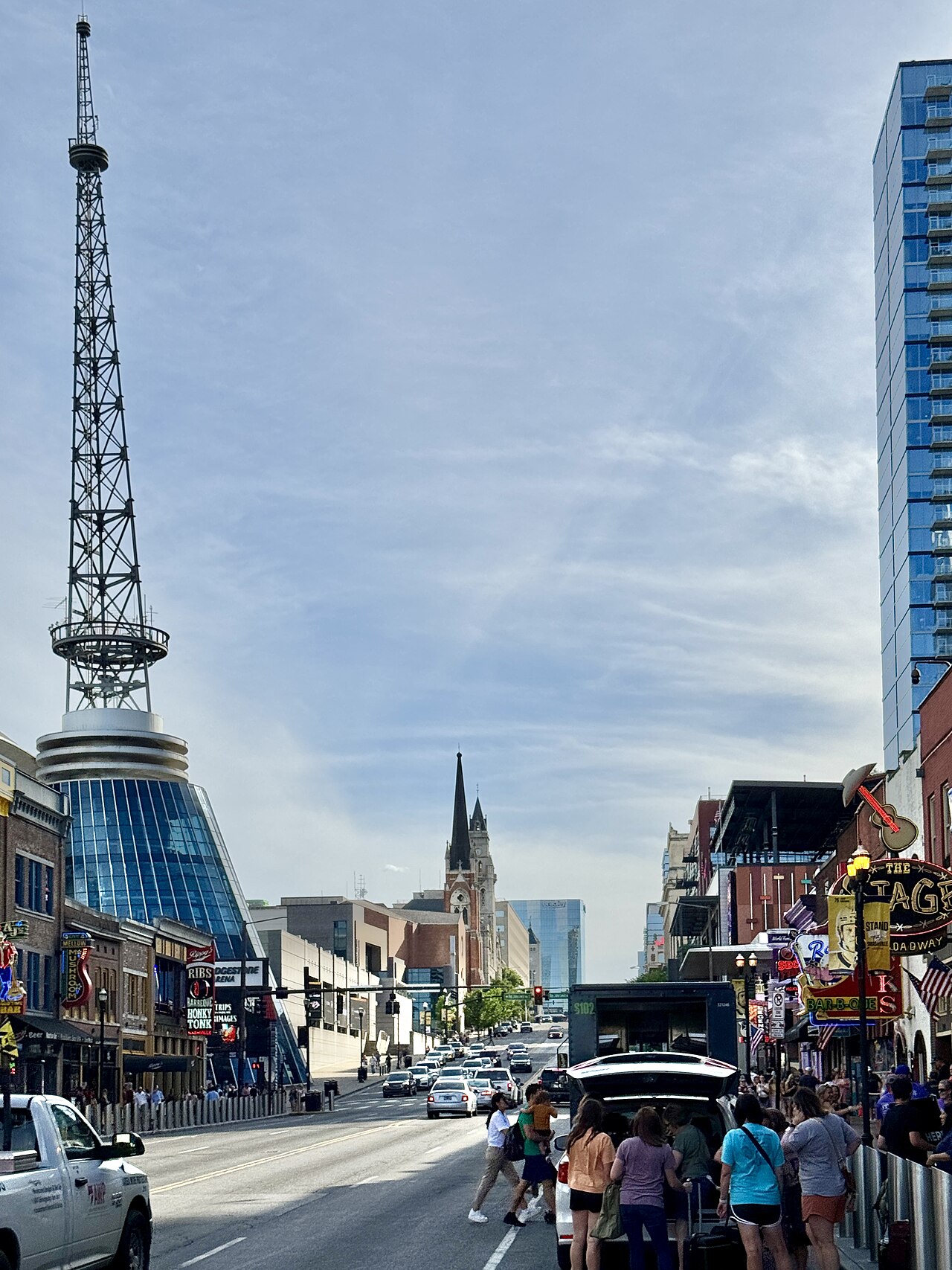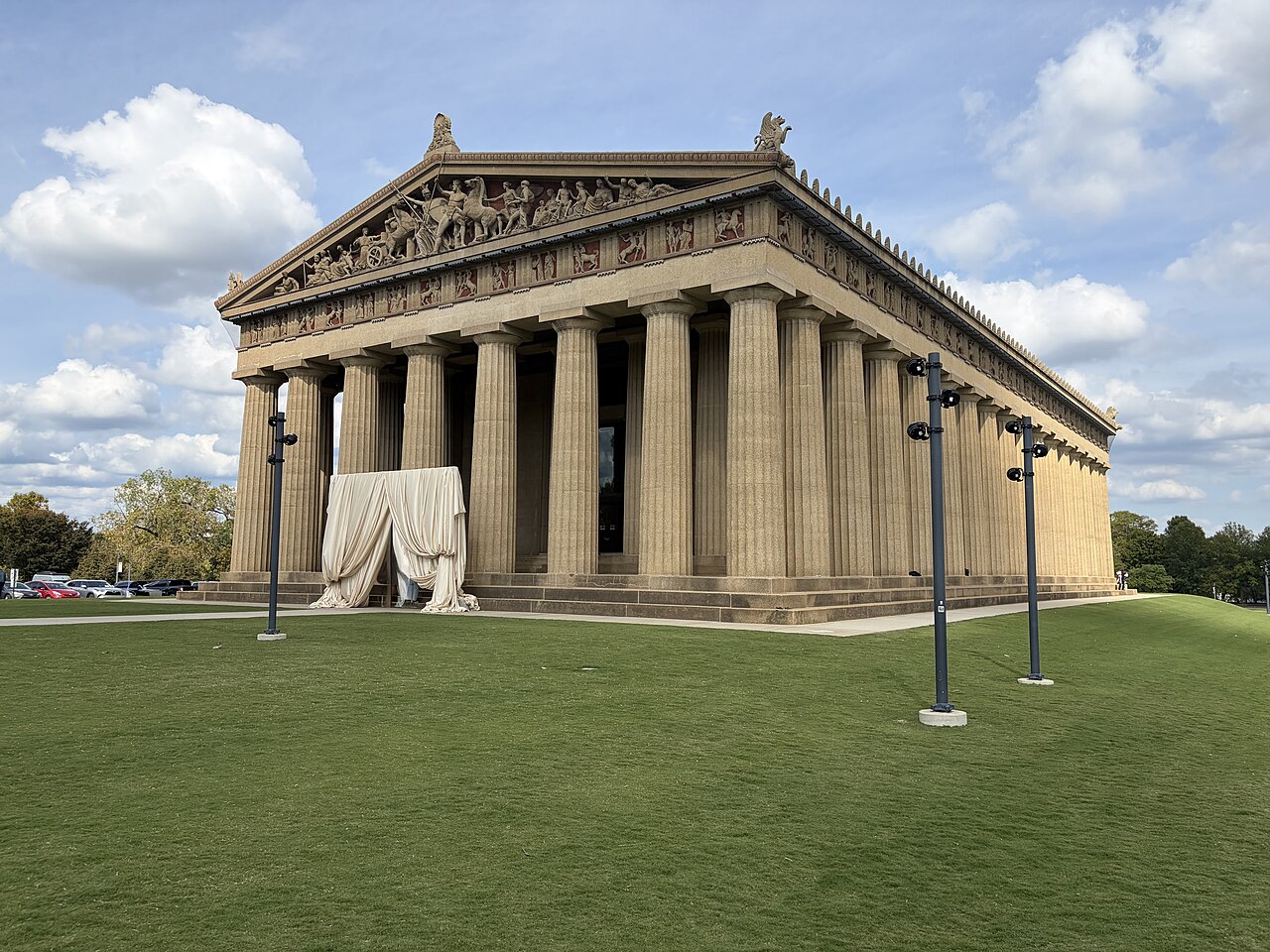
Nashville's attractions scatter wider than its walkable core suggests — Broadway's cluster, then the Parthenon two miles west, Music Row between, the Bicentennial Mall north, Midtown and the Gulch in the seams — and the Old Town Trolley is the standing answer: open-air orange-and-green trolleys running a continuous narrated loop of a dozen-plus stops, with all-day hop-on hop-off rights that turn the city's geography into a utility. The drivers carry the product: licensed-guide narration in the conductor tradition — history, music-business gossip, which hot-chicken line is worth it — refreshed loop by loop so riders who stay aboard for a full circuit (about ninety minutes) get the city's best orientation lecture with a breeze. The route logic serves the visitor's actual map: Lower Broadway and the museums, the Bicentennial Mall and Farmers' Market, Fisk/Germantown edges, Centennial Park's Parthenon, Music Row's label houses (the only practical way to "tour" the Row's exteriors with context), Midtown, and the Gulch's murals — the wings-and-whiskey photo stop included. Strategy is standard hop-on math: ride the full loop first from a morning start, mark the three stops your trip needs, then use the rest of the day's unlimited boarding as transit with commentary. Best for first mornings, car-free trips, mobility-conscious travelers, and families burning a flexible day; skippable for visitors staying strictly in the Broadway radius. Buy ahead online — morning boardings at the downtown stops thin out by ten.
The format's value is Nashville-specific. The city's sights do not line up on one spine: the downtown cluster (Broadway, Ryman, Hall of Fame, Cash Museum) walks easily, but the Parthenon sits two miles west, Music Row's famous addresses are a working office district with no public interiors and no narrative without a guide, and the connective neighborhoods — Germantown's Victorian blocks and market halls, Midtown's eat streets, the Gulch's mural-and-boutique grid — reward visits but not the parking.
The trolley stitches exactly this map, and its narration solves Music Row in particular: the Row is the tour's richest stretch precisely because a guide pointing at unmarked houses ("that bungalow is where they signed...") is the only version of the experience that exists.
Riding it well
Board early (first loops run uncrowded and the narration lands fresher), take the complete circuit for the overview — the conductors' material genuinely varies, and veterans collect favorite drivers — then split the day by cluster: hop off at Centennial Park for the Parthenon hour, reboard for the Gulch's murals and lunch, finish back at Broadway with the map fully installed. Seasonal calculus: open-air sides make spring and fall ideal, summer middays want the shaded rows and water, and winter runs are blanket-and-cocoa affairs with the thinnest crowds. The same operator's evening ghost-and-haunts variant and seasonal holiday-lights loops extend the fleet's uses past orientation.
Honest fit
Travelers with cars and confident parking appetites can self-drive this map, but downtown parking economics (event-night rates, honky-tonk-district lots) frequently make the trolley the cheaper chauffeur; car-free visitors should treat it as infrastructure. The skip case is real too — a weekend trip living entirely between Broadway and the Ryman needs no wheels at all. Logistics: tickets online ahead (boarding passes by phone), the full loop runs about ninety minutes with departures on steady headways, stops post next-arrival times, and the downtown boarding points queue deepest from mid-morning — start at nine and the day compounds.
Pair the first-morning loop with an afternoon museum block, and the trip's remaining days inherit a mental map that makes every rideshare decision cheaper and most of them unnecessary.
What to expect
The experience
A narrated open-air trolley loop of a dozen-plus stops — Broadway, Parthenon, Music Row, Gulch, Germantown — with all-day hop-on hop-off boarding and conductor-tradition guides.
Best time
Nine-a.m. starts ride uncrowded and compound all day; spring and fall suit the open sides. Buy online ahead.
How long
Ninety minutes for the full loop; the day for the hop-off rights.
Tips
Ride the complete circuit first, then split by cluster. Music Row only exists as a narrated drive-by — this is that. Downtown boardings queue from mid-morning. The skip case is real if you never leave the Broadway radius.
Quick picks
- Best for
- First mornings, car-free trips, and anyone whose itinerary spans the Parthenon-to-Broadway scatter.
- Families
- Open-air seats, driver jokes, and hop-off flexibility beat marching kids between distant clusters.
- Couples
- A breezy orientation loop that upgrades every later decision; the Gulch murals stop is the photo op.
- Pair with
- The Parthenon hop-off at Centennial Park; a Gulch lunch; the museum block once the map is installed.
- Time needed
- One morning loop plus opportunistic boardings all day.
Good questions
Is it worth it if we have a car?+
Often — downtown and event-night parking economics make the trolley the cheaper chauffeur, and Music Row's narration does not exist in self-drive form. The skip case is a trip that never leaves Broadway's radius.
How does hop-on hop-off work?+
One ticket buys all-day boarding on steady headways — ride the full ninety-minute loop first, then use it as transit between the Parthenon, Gulch, and downtown clusters.
What makes the narration good?+
Conductor-tradition licensed guides with genuinely varied material — history, music-business lore, food verdicts — refreshed loop by loop. Veterans collect favorite drivers.
What about Music Row?+
It is working offices with no public interiors — the trolley's narrated pass is the practical tour, naming the unmarked houses where the signings happened.
When should we board?+
Nine a.m. — thin trolleys, fresh narration, and the whole day's hop-off value ahead. Downtown stops queue from mid-morning in season.