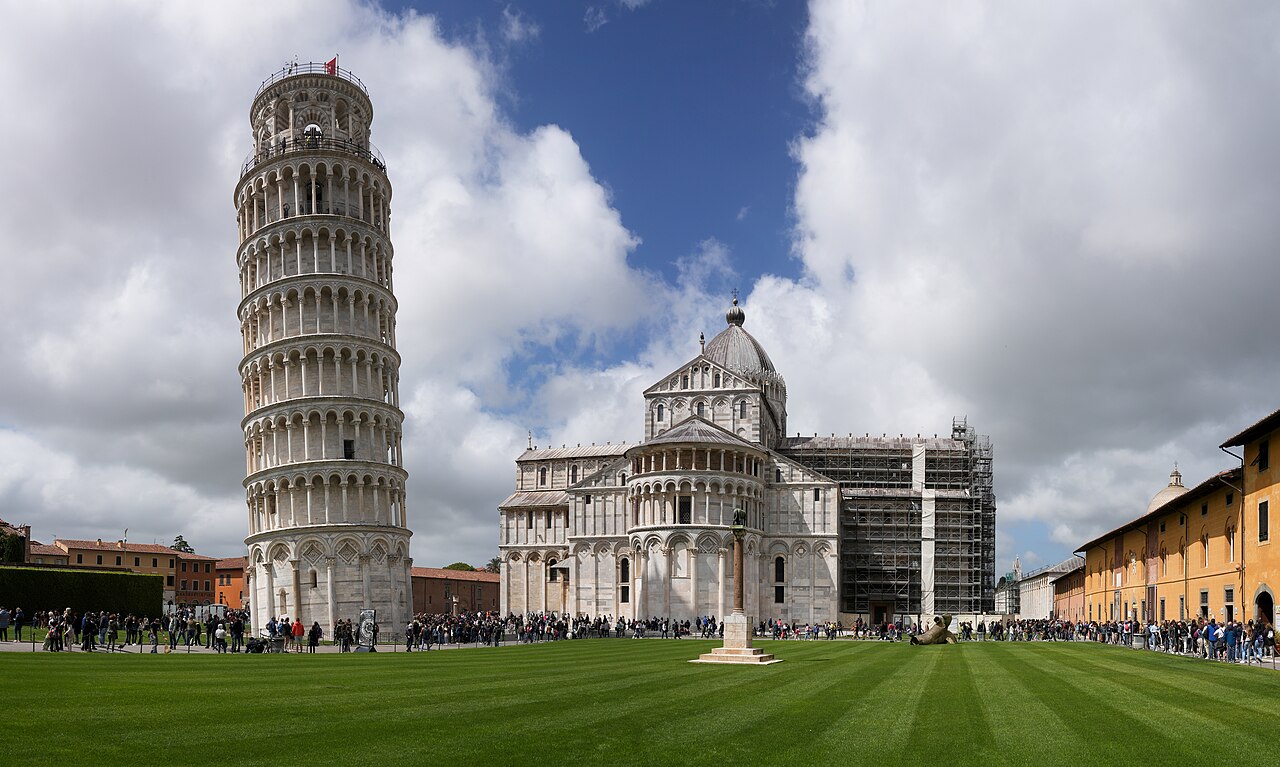
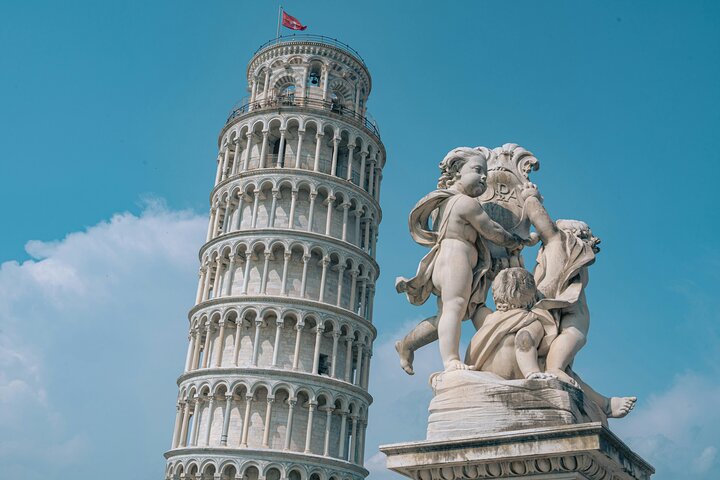
Leaning Tower of Pisa
Climb the most famous bell tower in the world, a white marble cylinder that began to tilt while it was still being built and now leans over the lawns of the Piazza dei Miracoli.
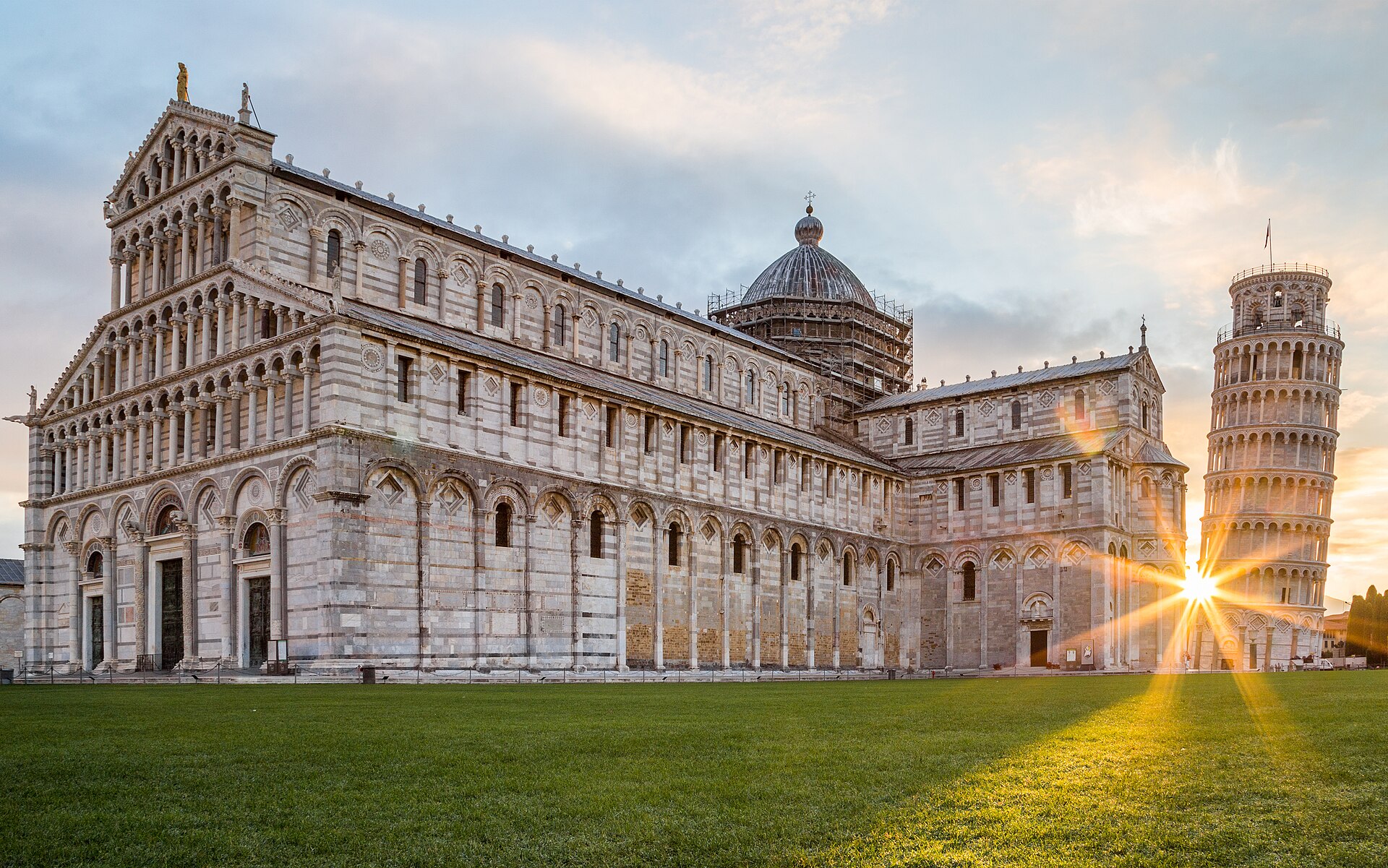
Italy
Pisa and Lucca sit twenty-five kilometres apart on the plain of northern Tuscany, linked by a short regional train, and together they make one of the most rewarding short breaks in Italy. Pisa is the famous one.
On the lawn of the Piazza dei Miracoli, a UNESCO World Heritage Site, the white marble Cathedral, the round Baptistery, the vast Camposanto cemetery and the Leaning Tower stand together like pieces on a green board, and climbing the tilted bell tower is still one of the great travel experiences in Europe. Beyond the square, the real city is a lively university town of riverside palaces along the Arno, the Renaissance Piazza dei Cavalieri and arcaded Borgo Stretto. Lucca is the quiet one. Its complete ring of Renaissance walls, more than four kilometres around and planted with trees, has become a park where locals walk, jog and cycle above the rooftops, and inside them are medieval towers, Romanesque churches, an oval piazza built over a Roman amphitheatre and the birthplace of Giacomo Puccini. This guide covers what is open and when, what to book, how to split your time between the two cities and where to stay.
Leaning Tower of Pisa
Climb the most famous bell tower in the world, a white marble cylinder that began to tilt while it was still being built and now leans over the lawns of the Piazza dei Miracoli.
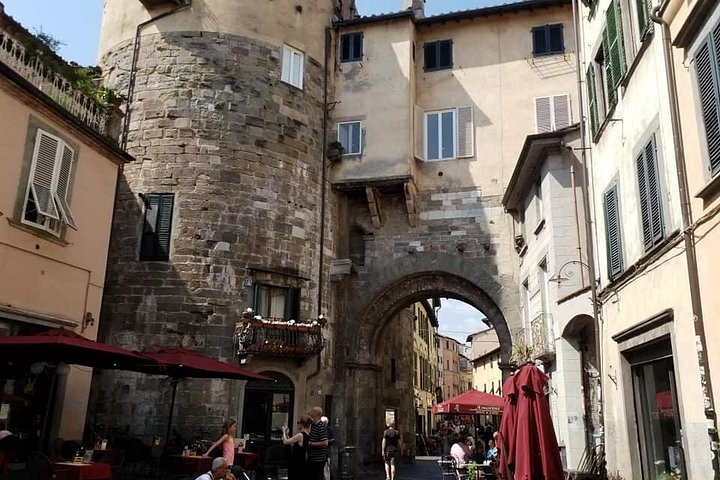
Lucca City Walls
Walk or cycle the complete ring of Renaissance ramparts around Lucca, a free, tree-lined promenade 4.2 kilometres long with views over towers, gardens and rooftops.
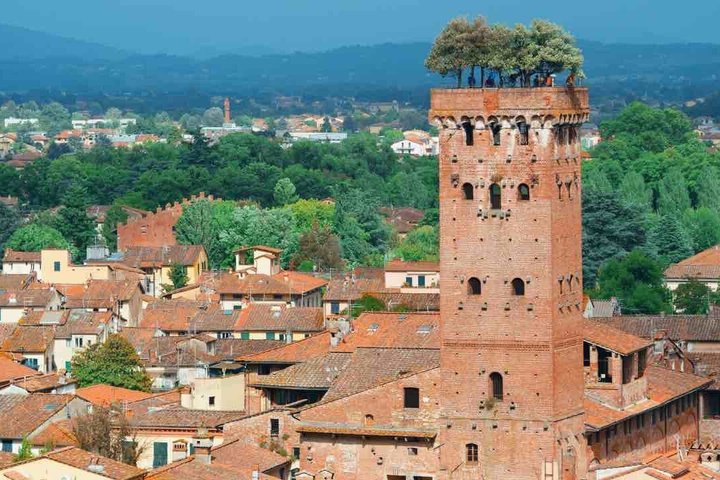
Guinigi Tower
Climb the 45-metre medieval tower of Lucca’s Guinigi family to a rooftop garden of holm oaks, with a 360-degree view over the walls, the towers and the Apuan hills.
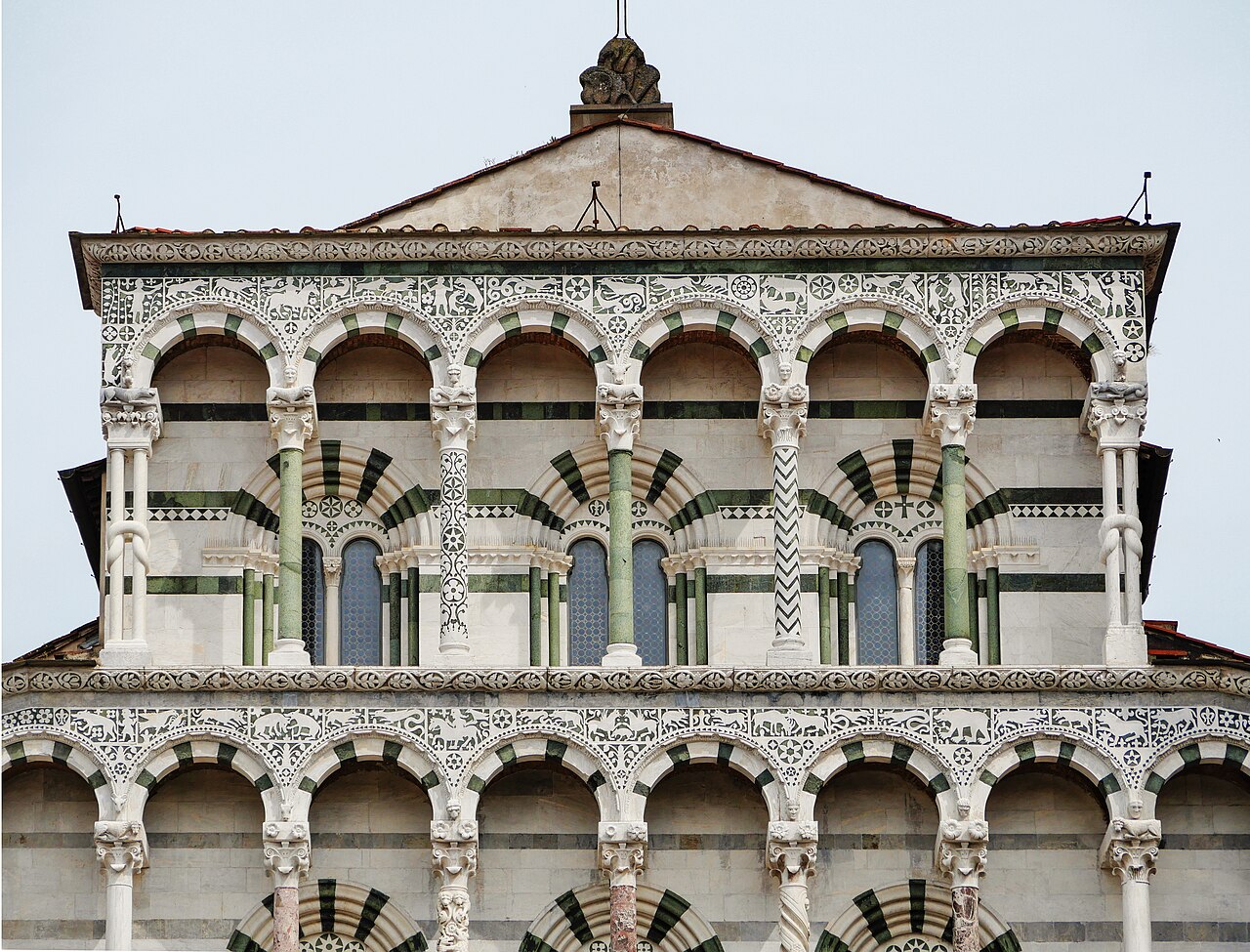
Lucca Cathedral of San Martino
Lucca’s Romanesque cathedral, with its lopsided arcaded façade, the venerated Volto Santo crucifix, Jacopo della Quercia’s tomb of Ilaria del Carretto and a climbable bell tower.
Hand-picked: every experience here has strong traveler reviews and a verified booking link.
Climb the most famous bell tower in the world, a white marble cylinder that began to tilt while it was still being built and now leans over the lawns of the Piazza dei Miracoli.
One ticket for the marble Cathedral, the cloistered Camposanto cemetery with its great fresco cycle, the Sinopie Museum and the Opera del Duomo Museum, without the tower climb.
A two-hour small-group tour with a live guide through the Cathedral and the Baptistery, then up the Leaning Tower, with the museums and Camposanto included too.
A morning walk with a tour leader and a multilingual audio guide, from the Piazza dei Miracoli through the historic centre to the Renaissance Piazza dei Cavalieri.
A three-hour small-group experience that pairs a guided visit of the Piazza dei Miracoli and a Leaning Tower ticket with a tasting of Tuscan wine led by a local expert.
A seven-hour coach trip from Livorno, the cruise port for Pisa, with a guided walk through walled Lucca, free time for lunch and a visit to the Piazza dei Miracoli.
FreeWalk or cycle the complete ring of Renaissance ramparts around Lucca, a free, tree-lined promenade 4.2 kilometres long with views over towers, gardens and rooftops.
Climb the 45-metre medieval tower of Lucca’s Guinigi family to a rooftop garden of holm oaks, with a 360-degree view over the walls, the towers and the Apuan hills.
Lucca’s Romanesque cathedral, with its lopsided arcaded façade, the venerated Volto Santo crucifix, Jacopo della Quercia’s tomb of Ilaria del Carretto and a climbable bell tower.
The family home in central Lucca where Giacomo Puccini was born, with the Steinway piano on which he worked on Turandot, original scores, letters and a Turandot costume.
Step inside the largest baptistery in Italy, a round marble giant on the Piazza dei Miracoli with a famous echo, a carved pulpit by Nicola Pisano and a gallery with views over the square.
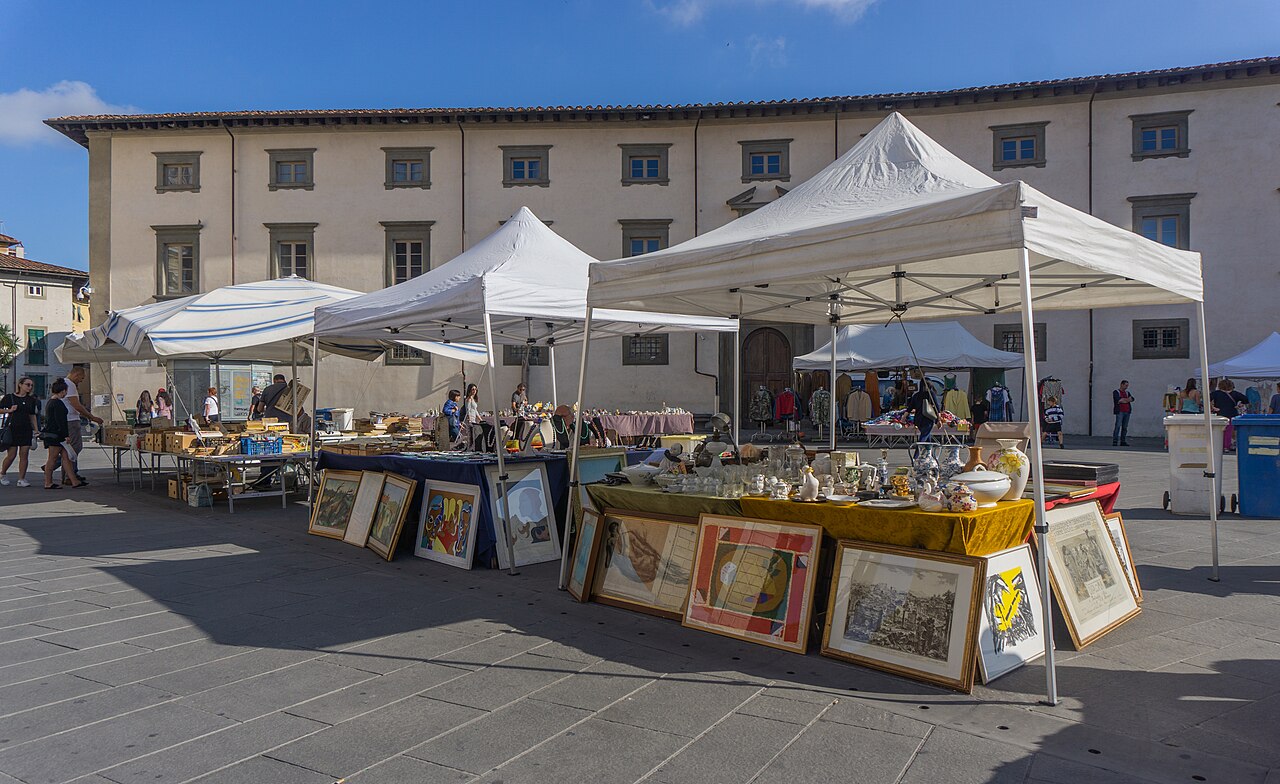 Free
Pisa’s Renaissance showpiece square, a free open-air stop with a Vasari-designed palace, the Knights’ church of Santo Stefano and a Medici duke on a plinth, a short walk from the Miracoli.
Hotels we would book ourselves, from splurges to good-value bases.
Piazza Napoleone, Lucca Old Town
Lucca’s most stylish address, a restored palazzo on Piazza del Giglio beside Piazza Napoleone, with a restaurant on the square, a wine cellar, a champagne rooftop and a fitness room.
Check rates →Via del Fosso, Lucca Old Town
A friendly four-star inside Lucca’s walls on the quiet Via del Fosso canal, with free bikes, a garden terrace, a complimentary all-day snack buffet and private parking.
Check rates →Piazza dei Cavalieri, Pisa Old Town
A four-star hideaway on a quiet lane of medieval Pisa, two minutes from Piazza dei Cavalieri and a short walk from the Leaning Tower, with a garden, a terrace and breakfast included.
Check rates →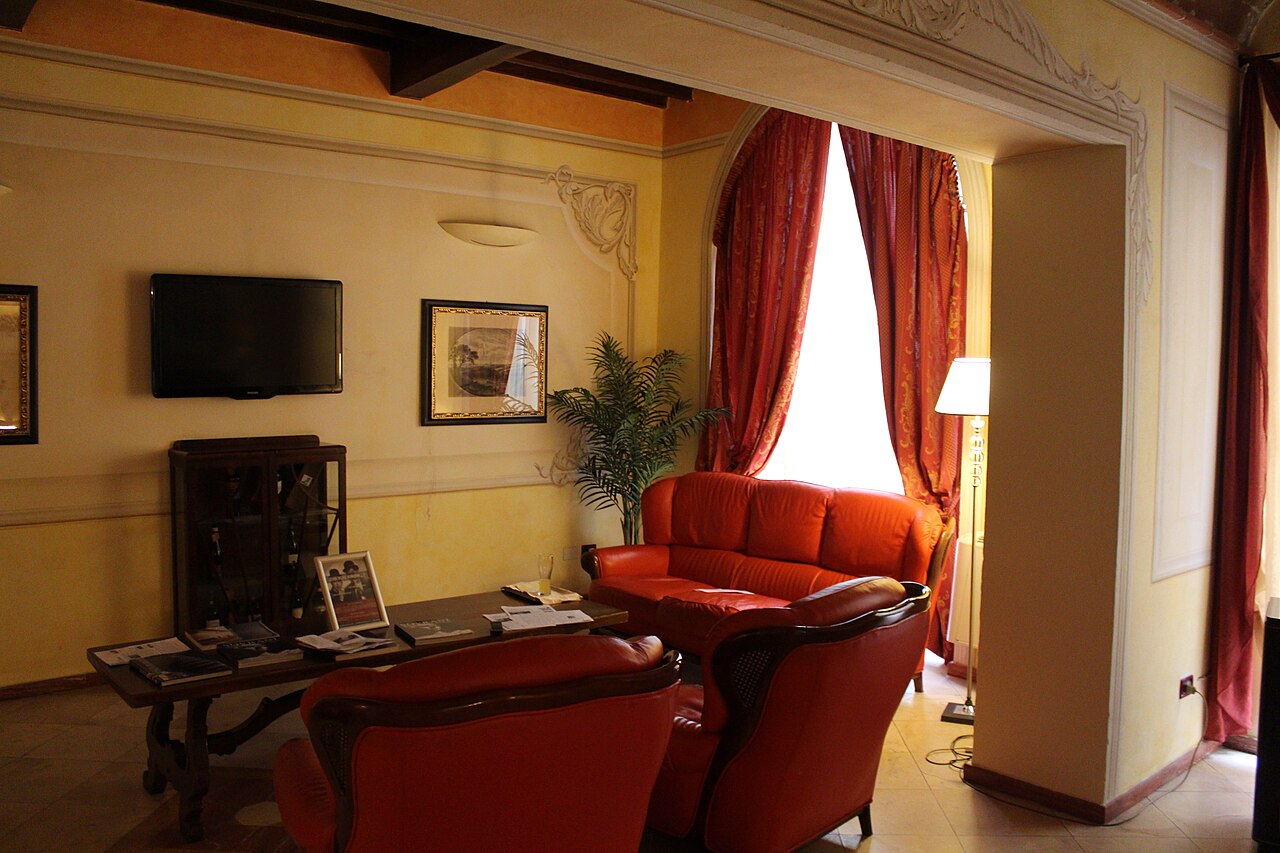 $$$
Via Mazzini, near Pisa Centrale
A well-run four-star in a Tuscan palazzo on Via Mazzini, five minutes from Pisa Centrale station, with courtyard parking, bike hire and easy access to the airport and Lucca.
Check rates →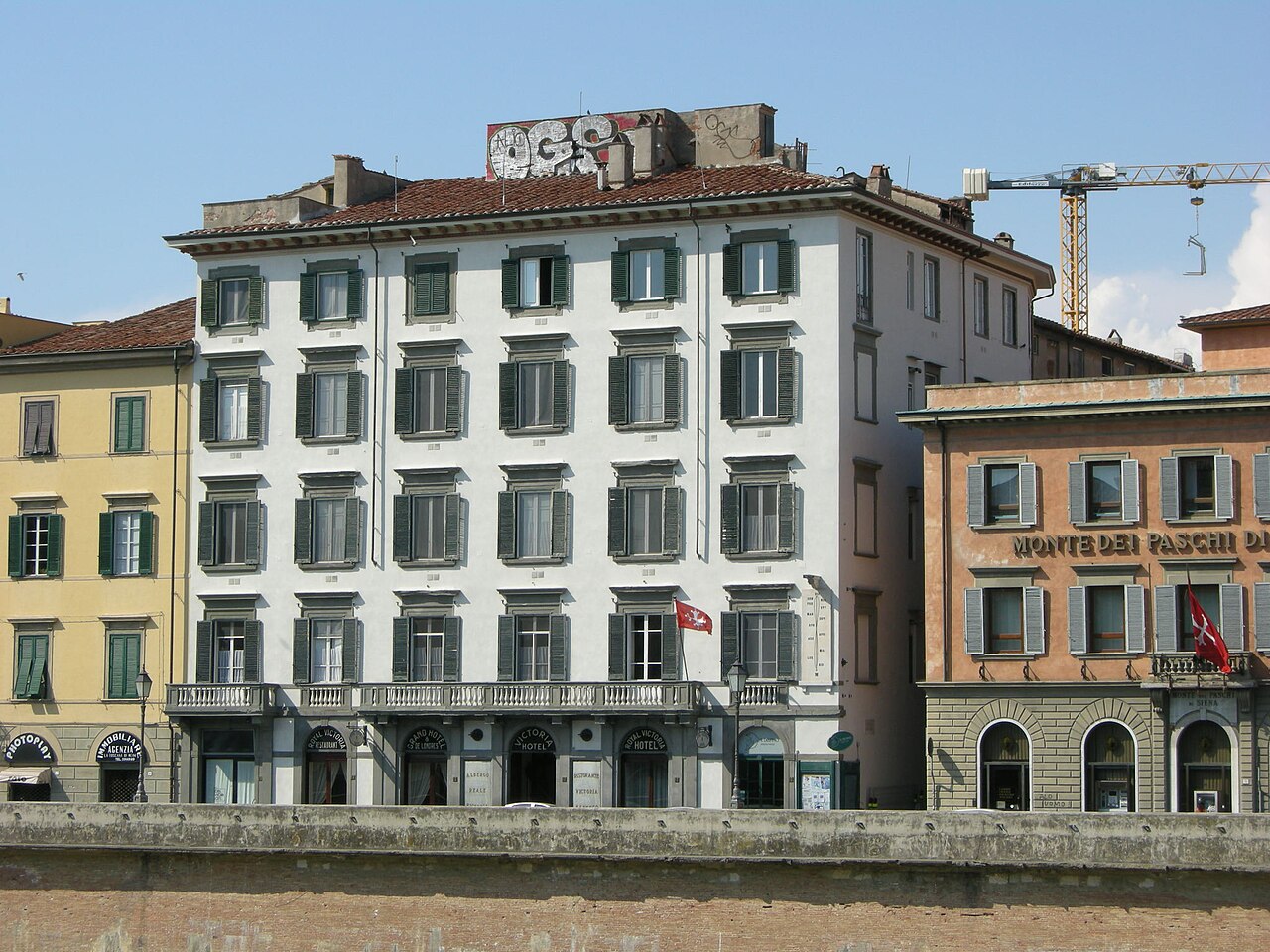 $$
Lungarno Pacinotti, Pisa
Pisa’s oldest hotel, opened in 1839 on the Arno and still run by the same family, with river-view rooms, period salons, breakfast included and a guest book of famous names.
Check rates →Via Santa Maria, near the Piazza dei Miracoli, Pisa
A four-star hotel on Via Santa Maria, about three minutes on foot from the Leaning Tower, with a rooftop terrace, a bar, an Italian restaurant and breakfast buffet included on most rates.
Check rates →Via della Dogana, Lucca Old Town
A friendly three-star in Lucca’s old town on Via della Dogana, two minutes from the walls and Piazza Napoleone, with family rooms, a terrace, a bar and limited on-site parking.
Check rates →Piazza Arcivescovado, next to the Piazza dei Miracoli, Pisa
A small, simple hotel on Piazza Arcivescovado, about two minutes on foot from the Leaning Tower, with a lift, a bar, paid parking and air-conditioned rooms.
Check rates →Piazza della Stazione, opposite Pisa Centrale
A dependable four-star-style chain hotel facing Pisa Centrale station. The easiest base for train days to Florence, Lucca and the coast, with a straight walk into the old town.
Check rates →Tirrenia, coast west of Pisa
A family-friendly beach resort in Tirrenia, on the pine-backed coast west of Pisa. A different kind of stay, with pools and sand, for travellers who want the tower as a day trip.
Check rates →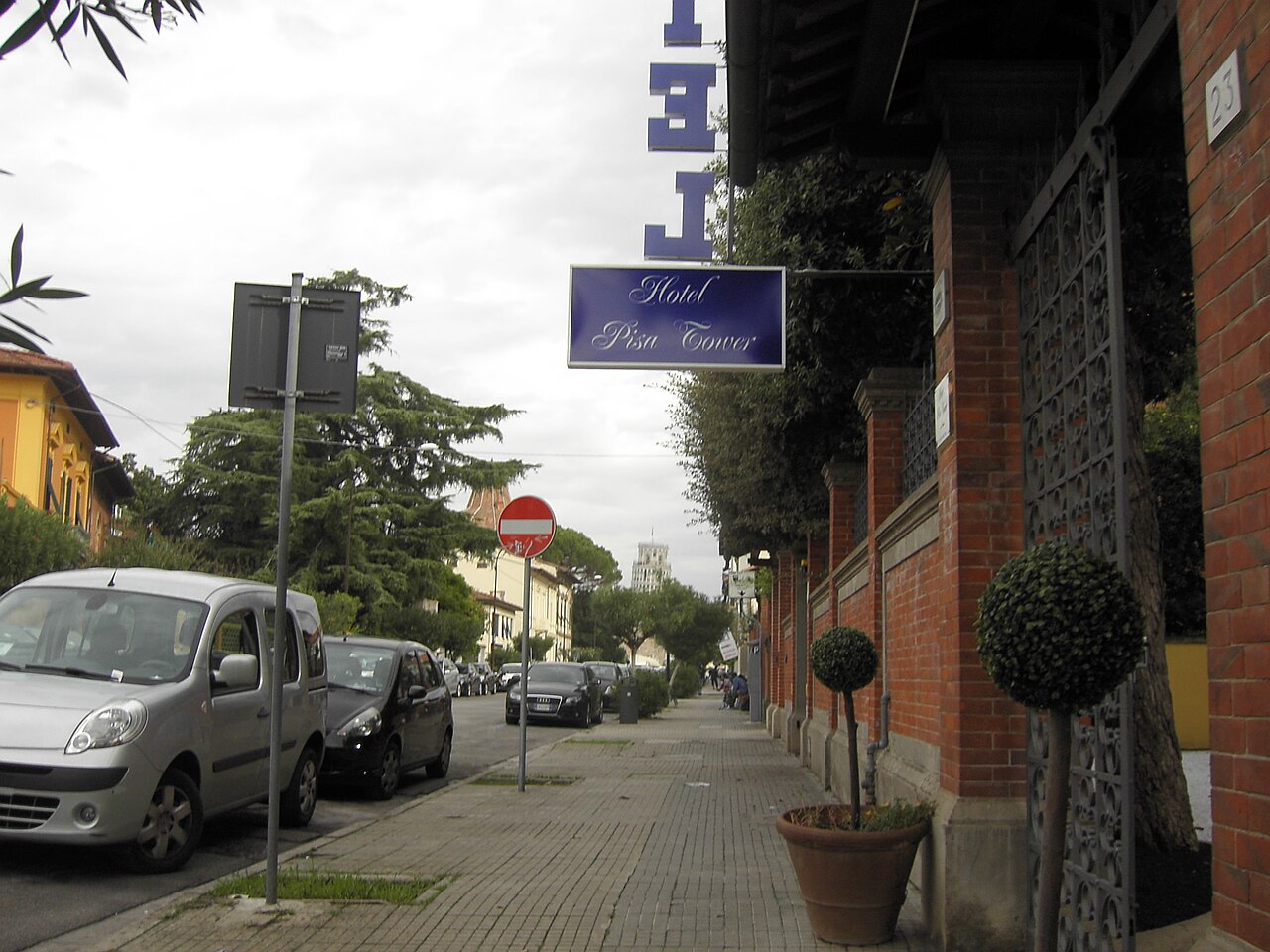 $$
Near the Leaning Tower, Pisa
A simple, good-value hotel named for the monument it sits near, aimed at travellers who want to be on foot for the Piazza dei Miracoli. Check the walking time when you book.
Check rates →Airport side, Pisa
A budget chain hotel on the airport side of Pisa, practical for early flights, late arrivals and hire-car pickups. The city and the tower are a short ride away.
Check rates →Ready-made pairings: a top sight and a hotel that suits it. Add both to your trip and book each when you are ready.
Do
Leaning Tower of PisaStay
Hotel Villa KinzicaPiazza Arcivescovado, next to the Piazza dei Miracoli, Pisa
Do
Lucca City WallsStay
Hotel IlariaVia del Fosso, Lucca Old Town
Do
Guinigi TowerStay
Hotel Pisa TowerNear the Leaning Tower, Pisa
A practical primer for a first visit to Pisa and Lucca: what to book ahead, getting in from the airport, the train between the two cities, how many days you need and where the headline sights fit.
Where to stay in Pisa and Lucca: whether to base yourself in one city or both, the best areas near the tower, the station and inside Lucca’s walls, with a hotel for every budget.
A three-day plan for Pisa and Lucca: the Piazza dei Miracoli on day one, Lucca’s walls, towers and piazzas on day two, and a slower third day of old-town Pisa, river views and Puccini.
A guide to the food of Pisa and Lucca: cecina and market lunches in Pisa, tordelli, farro soup and buccellato in Lucca, local olive oil and wine, and how to avoid tourist traps.
When to visit Pisa and Lucca: how spring, summer, autumn and winter compare for weather, crowds and opening hours, plus the festivals and concerts that shape the calendar.
How to visit Pisa and Lucca with children: the tower age limit and alternatives, cycling the walls, the Baptistery echo, easy free stops, family hotels and tips for keeping everyone happy.